MFI-600
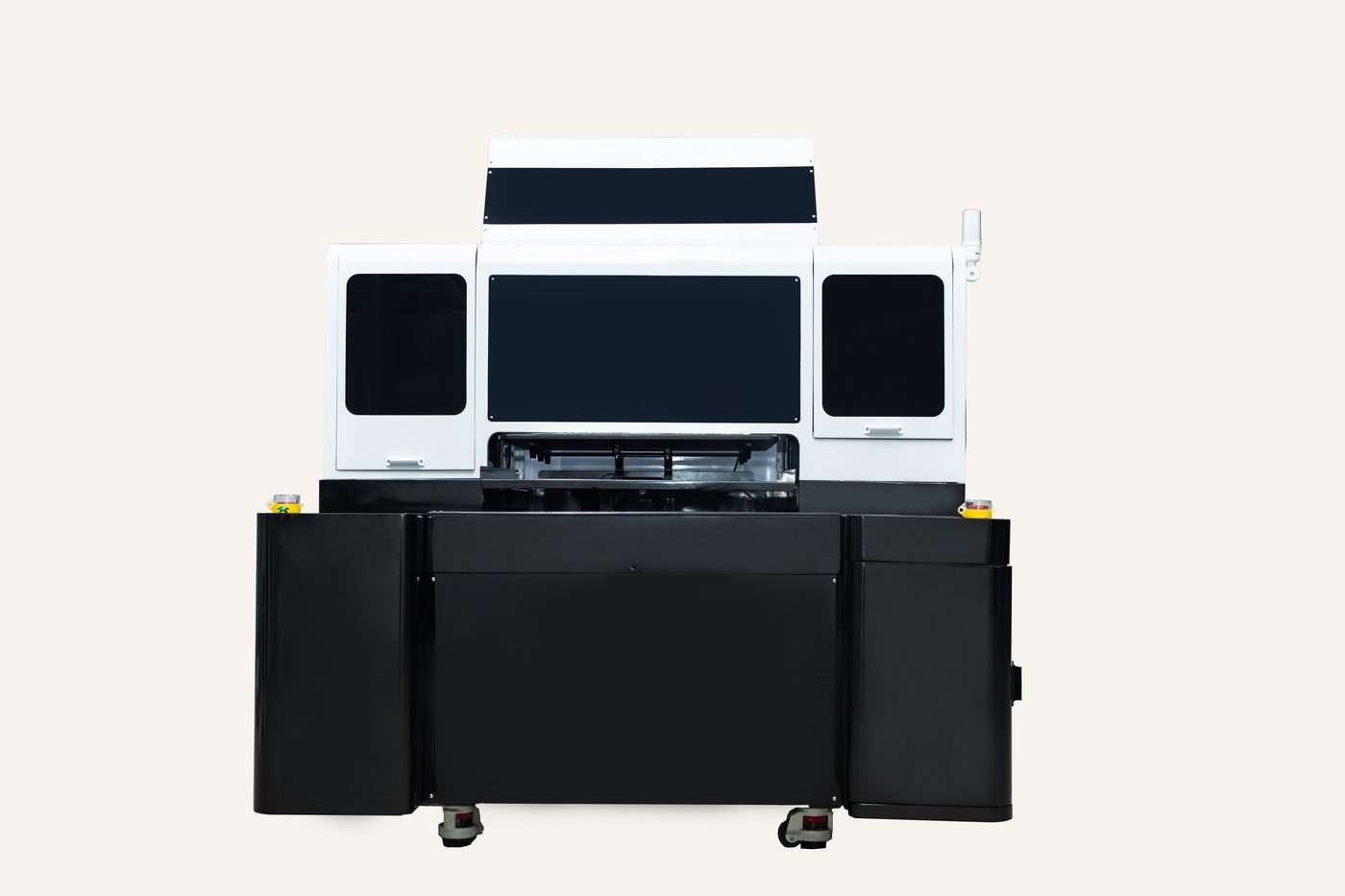
Four heads, 600 × 600 mm, camera alignment. The production machine: pretreatment, white, colour and finish in one pass, and enough relief clearance for embroidery, patches and thick garments.
Who it is for
A shop that already sells shirts and wants to add embroidery, patches and heavy garments without sending them out. Also the second machine for a print room that has outgrown a two-head printer: the same ink family, twice the output and a bigger bed.
Embroidery shops
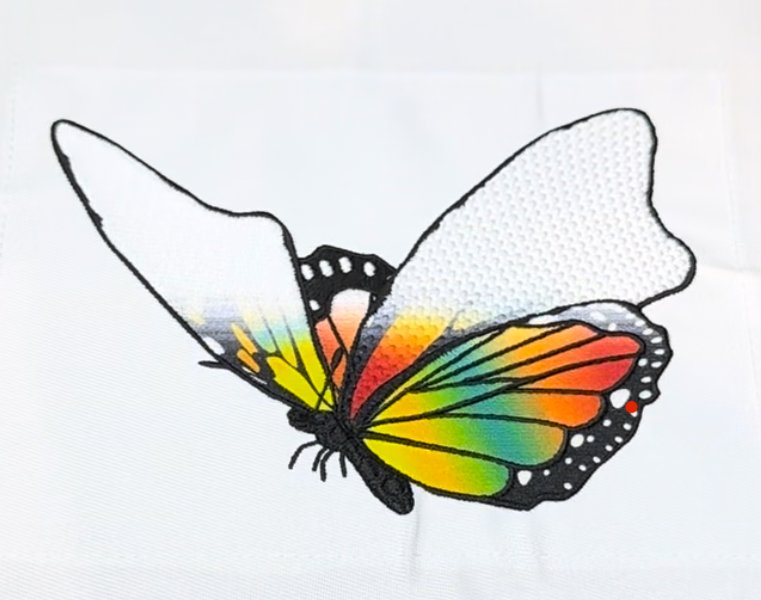
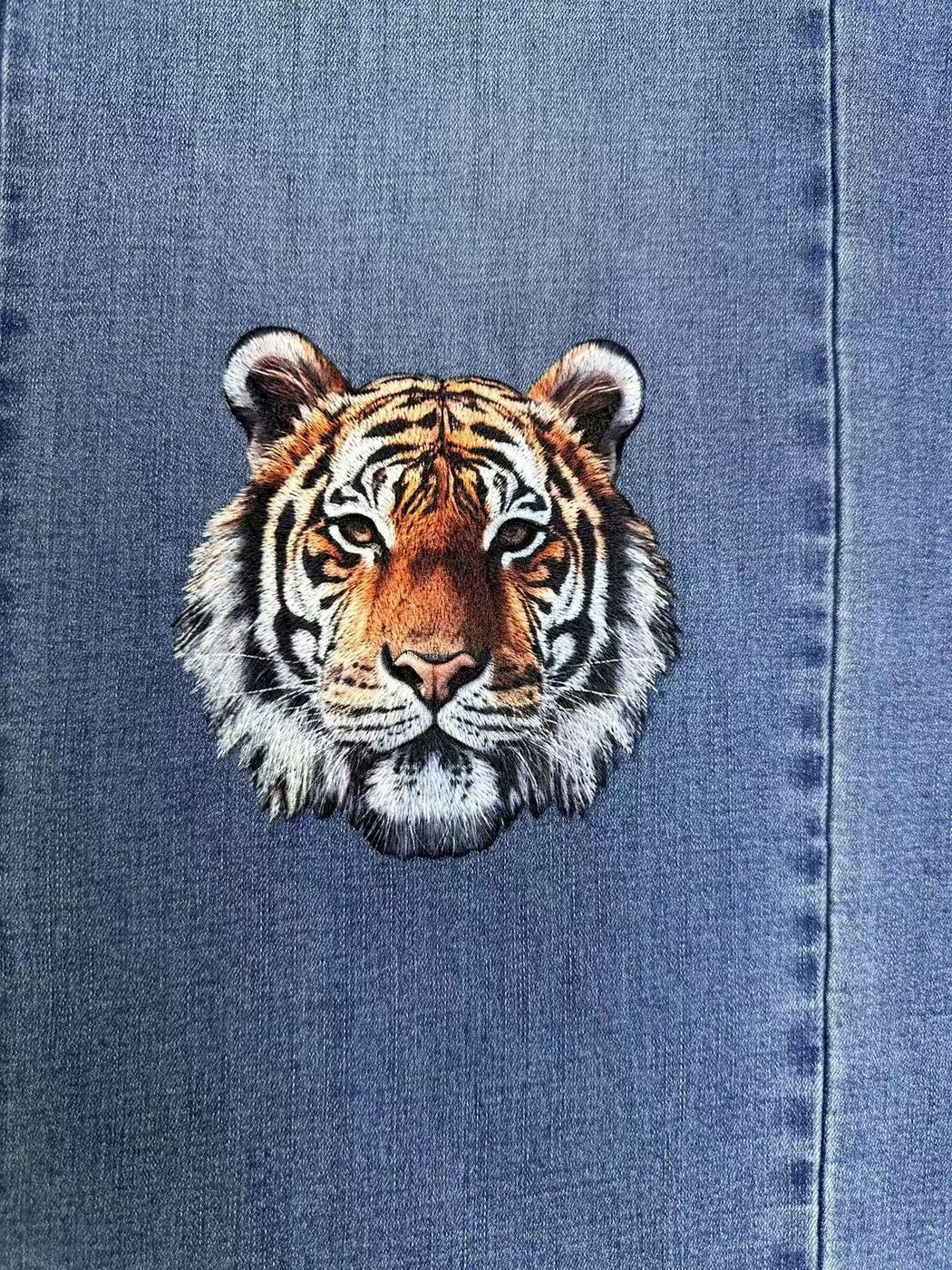
Stitch in white or black, then print the colour on top. The camera finds the stitch field and the heads follow it.
Patch and badge makers
A 600 × 600 mm bed holds a run of patches at once, and the platform handles stacked or mounted pieces.
Growing print rooms
103 pieces an hour on dark fabric, with pretreatment, white, colour and finish in a single pass.
What it does
Four layers, one pass
Four independently controlled heads: pretreatment, white, CMYK and post-treatment. No separate pretreatment station, no manual white pass, no second trip through a heat press for the finish.
Camera alignment
An industrial camera reads the fabric, locates the embroidery or the print zone, and offsets the artwork to match. The print follows what is already on the garment.
Relief and thick goods
Up to 6 mm of relief under the heads, with an automatically lifted platform, so embroidery, foam and appliqué print without crushing the surface.
Maintenance built in
White ink circulation, timed stirring and automatic cleaning. The routines that eat a shift on older machines run on their own.
At a glance
Four numbers that decide whether the machine fits your work. The bed is drawn to scale, with an A4 sheet inside.
Specifications
One thread colour, printed colour
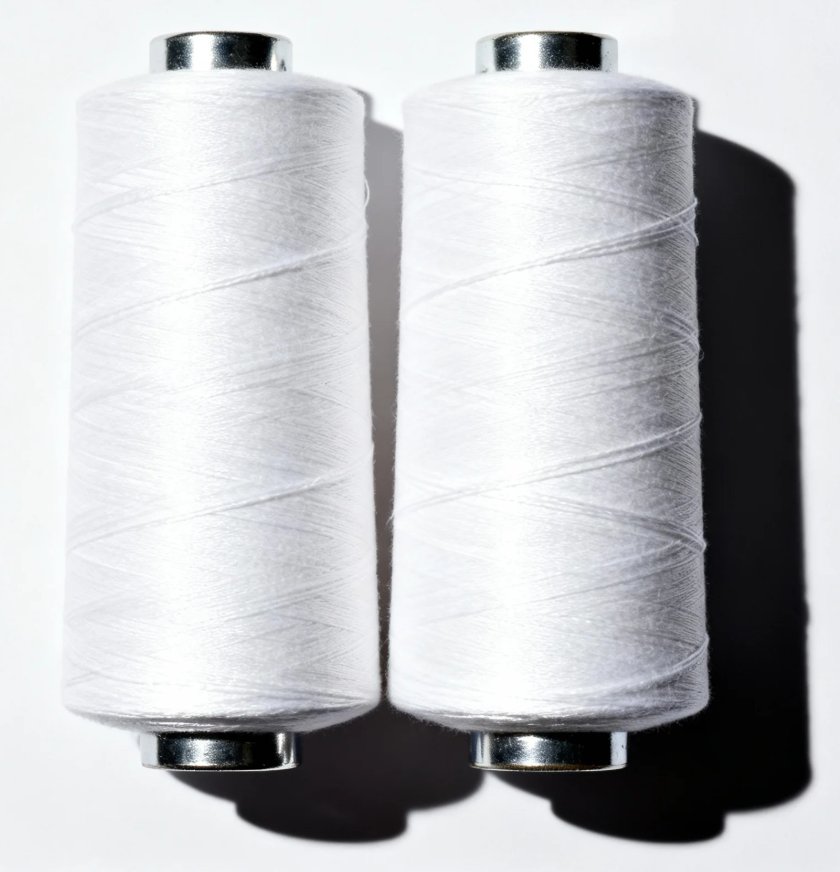
Embroider in white or black, then print the colour onto the stitches. Two thread colours replace a pantry of them, the needle count drops, and the back of the garment comes out flat instead of knotted.
Thread cost
Down by around 70 per cent, because the colour comes from ink rather than from a shelf of coloured bobbins.
Needle count
About 10 per cent fewer stitches for the same design, and fewer thread trims, so the machine spends less time per piece.
Sampling
No plate making and no colour matching by hand. A new colourway is a file, not a setup, so a sample takes hours instead of days.
What it prints
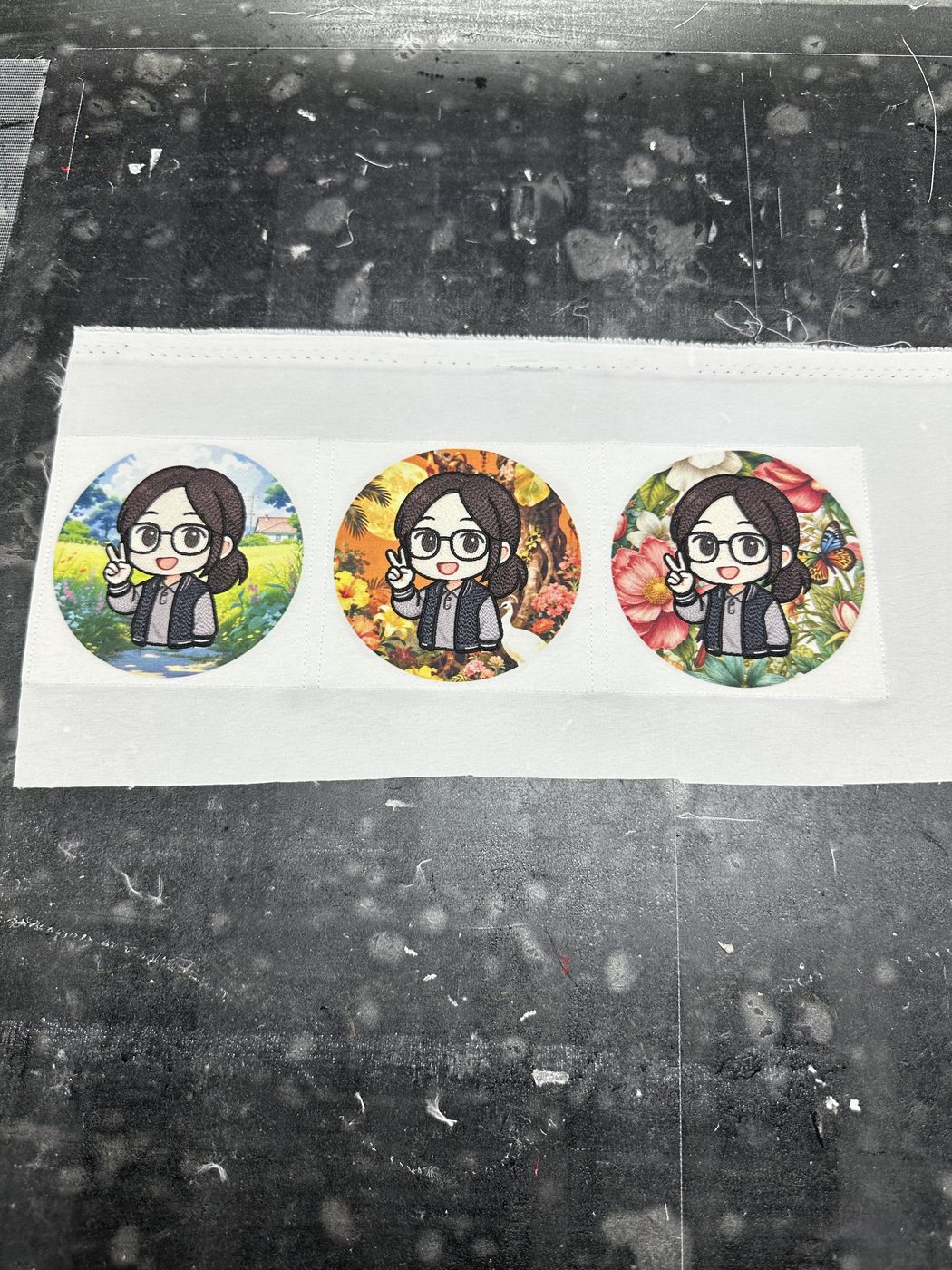
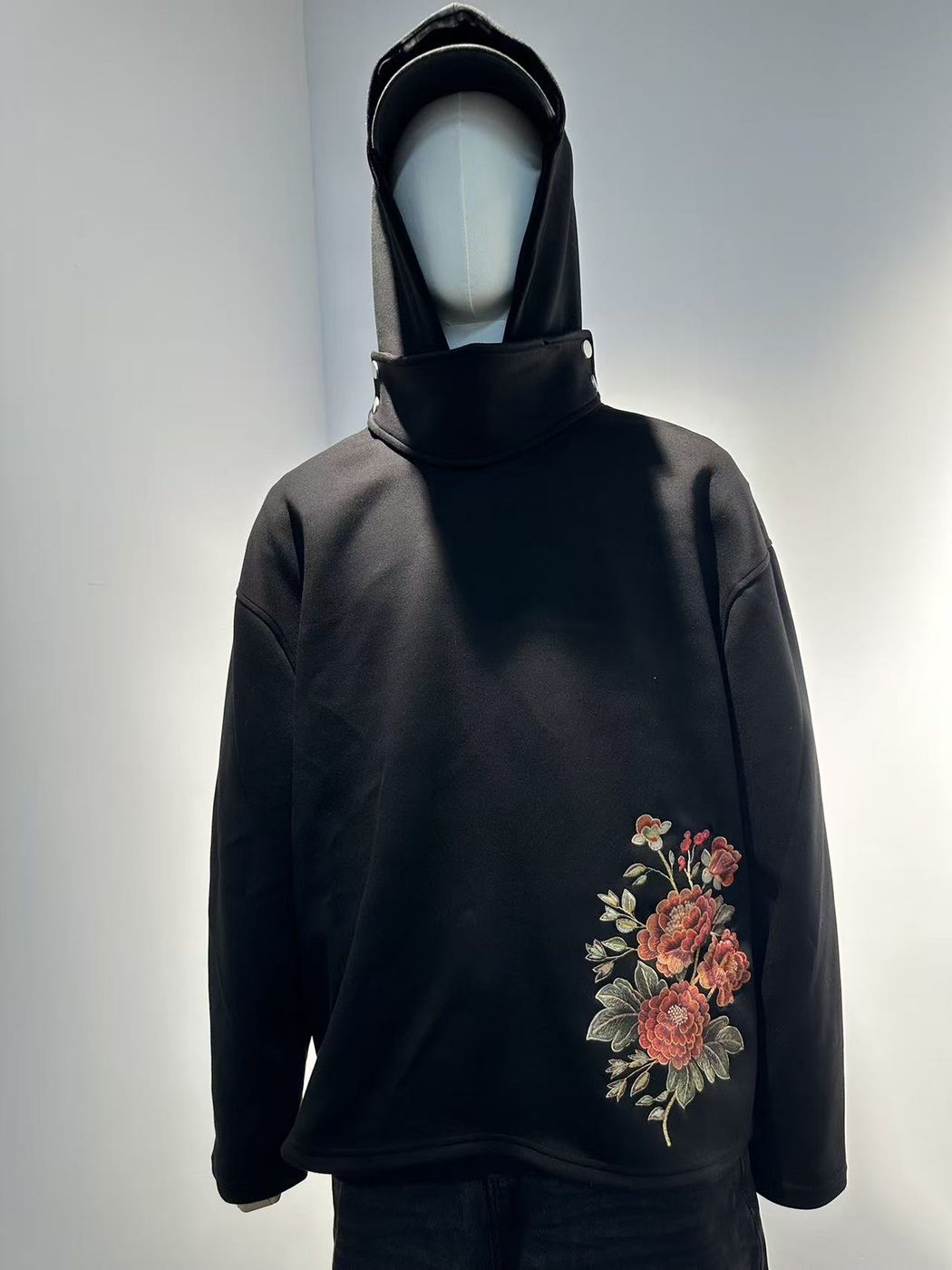
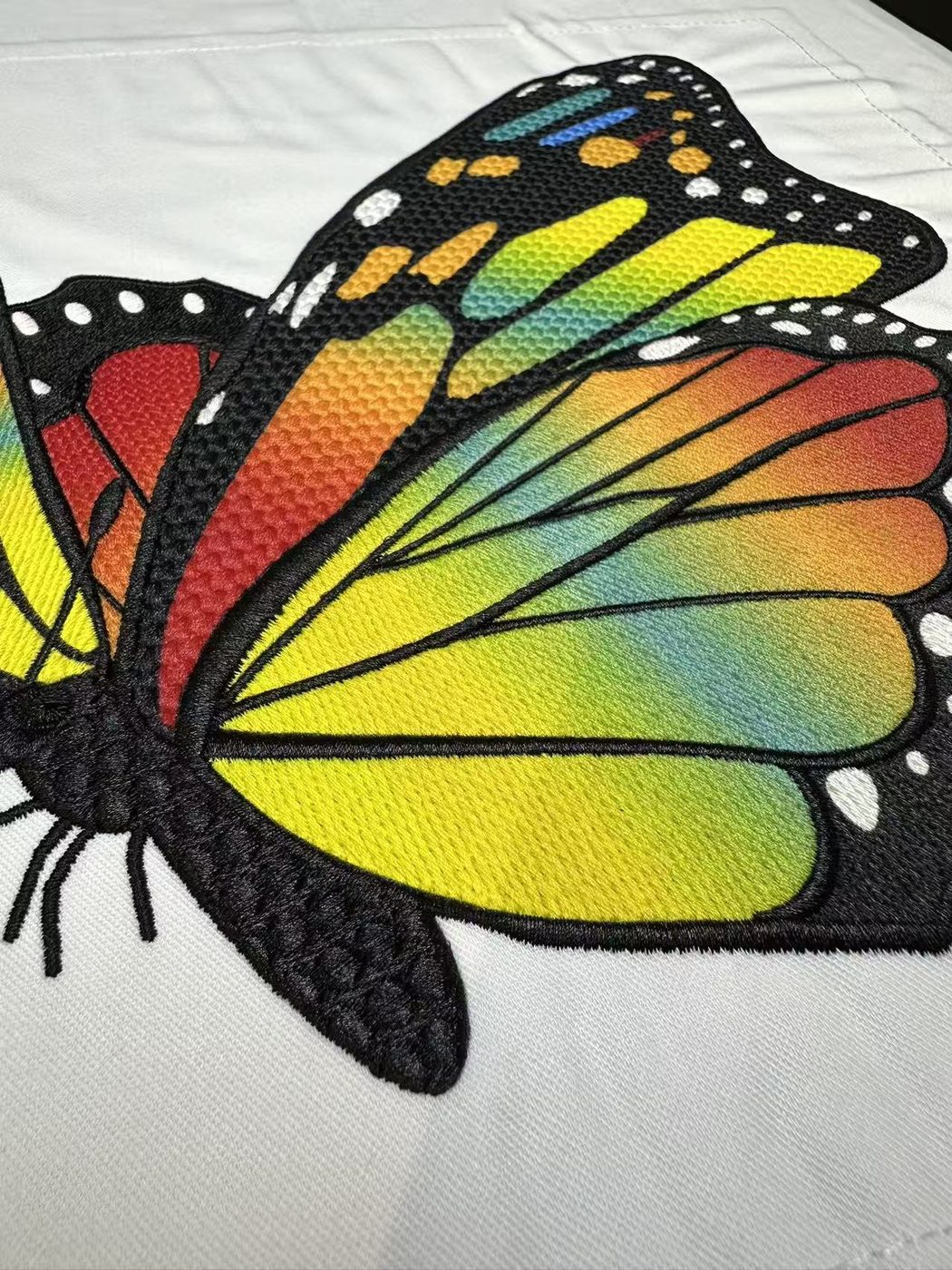
MFI-600 or Aio
Both machines run the same ink family and the same RIP. The difference is what they are built to do all day.
| Specification | MFI-600 | DTG4050-Aio |
|---|---|---|
| Print heads | 4 × XC90 industrial | 2 × industrial |
| Print area | 600 × 600 mm | 400 × 500 mm |
| Layers in one pass | Pretreatment, white, colour and finish | Pretreatment on demand, then colour |
| Throughput | 50 to 103 pcs/hour | 50 s per A4, light fabric |
| Drying | Finish head in line | Drying base, 40 to 100 °C |
| Relief under the heads | Up to 6 mm | Flat goods, T-shirt focus |
| Ink packs | 1 L / 5 L | 500 ml |
| Footprint | 2050 × 1550 × 2000 mm | 1221 × 1000 × 1500 mm plus drying base |
| Built for | Production, embroidery, thick goods | On-site retail, first machine |
See your artwork on a shirt
Upload a club badge or a logo. It is drawn in your browser and never sent to a server.
What you are checking is placement and coverage, not colour fidelity. When you send the artwork for a real sample, we print it on your fabric and photograph the result.
PNG, JPG or SVG · stays on this device
Send us the fabric. We print the sample.
Tell us the garment, the artwork and the volume. We print on your material and send photographs within two working days.